If you want the pretty picture version: Follow these steps. For a more detailed explanation, see below.
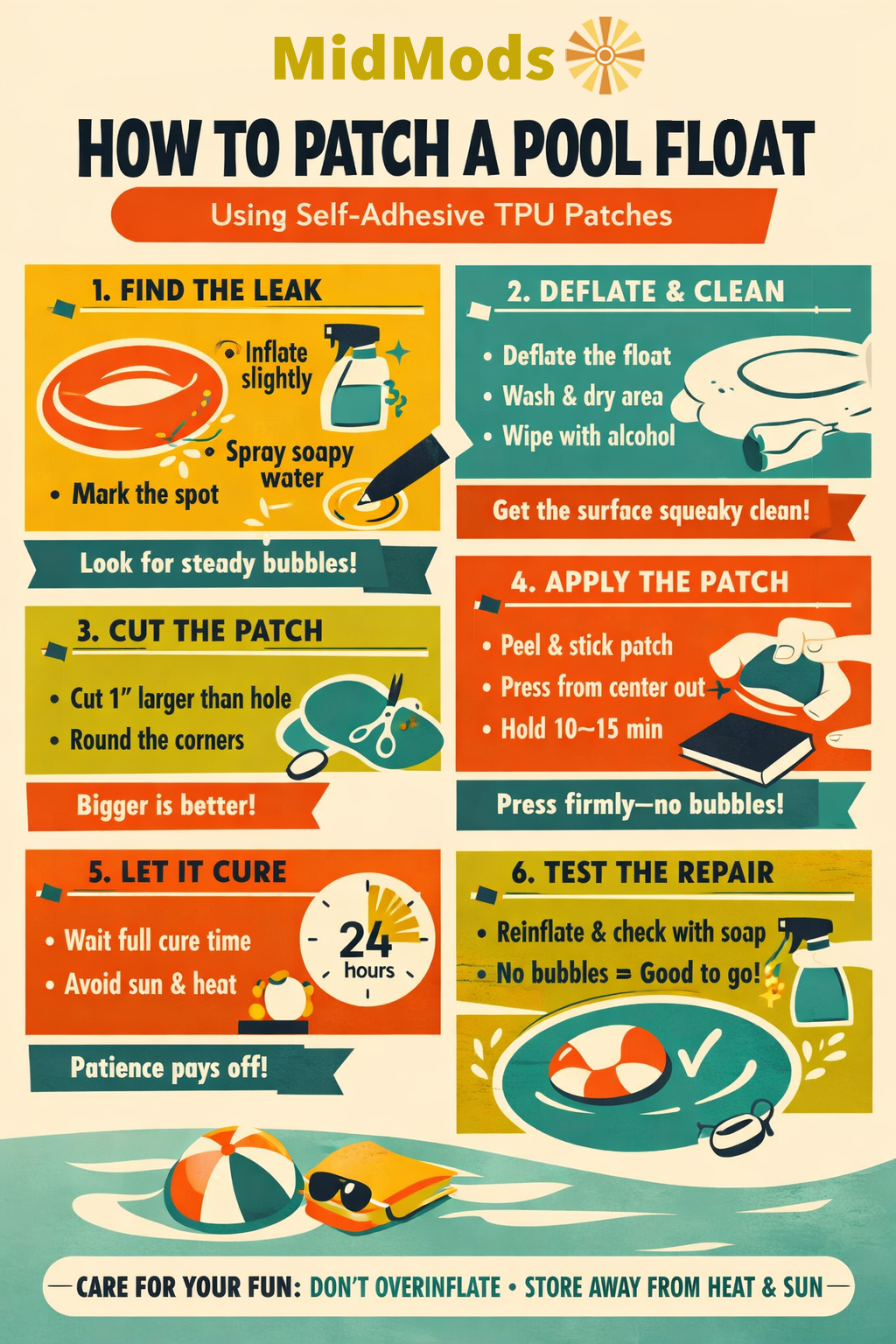
MORE DETAILED / LESS FUN BREAKDOWN:
1. Find the leak.
Inflate the float slightly and listen for a hiss or use a little soapy water — bubbles will show you the exact spot. Be patient and take your time. This step can take a minute. If you can't find, try tracking each section and double check that you are covering each and every inch of the float. The spot you miss could very well contain the leak!
2. Deflate the float
Open the valve and push out the air. Place the leak section on a flat sturdy surface.
3. Dry and prep the area.
Wipe the surface clean and make sure it’s completely dry. You can use some rubbing (isopropyl) alcohol to really clean the spot. This is useful if you think there might be sunscreen on the surface of the vinyl. TPU sticks best to a smooth, residue‑free surface.
4. Cut your patch to size.
Trim a piece of TPU patch large enough to cover the leak with at least ½ inch of extra space around it. Round the corners so it won’t peel up over time.
5. Peel and place.
Remove the backing and carefully press the patch directly over the leak. Start from the center and smooth outward to push out any air bubbles.
6. Apply firm pressure.
Hold the patch down for 30–60 seconds. This helps the adhesive bond evenly across the surface.
7. Let it settle.
Wait at least 12 hours. How about just give it a day? Top up the air and double check the patched area before floating on with your life.
**If your leak is stubborn and the patch is not holding, please contact us!
Was this article helpful?
That’s Great!
Thank you for your feedback
Sorry! We couldn't be helpful
Thank you for your feedback
Feedback sent
We appreciate your effort and will try to fix the article